
API development and MCP servers: connect systems, integrate AI
Evoya AI provides API development in Switzerland: integrations for ERP, CRM and Microsoft 365, plus MCP servers that give AI agents controlled access to your systems.
What does API development with MCP involve?
API development means building interfaces so that software systems exchange data automatically instead of people retyping or copying it. Evoya AI, based in Uster, Switzerland, builds APIs, webhooks and integrations and adds MCP servers so that AI agents can also work securely with your systems.
The Model Context Protocol (MCP) is an open standard that Anthropic published in November 2024. It defines how AI applications access tools and data sources in a uniform way. Since December 2025, MCP has been developed under the Agentic AI Foundation, part of the Linux Foundation, and according to the official MCP blog it is supported by ChatGPT, Claude, Gemini, Microsoft Copilot, Cursor and Visual Studio Code.
APIs and MCP complement each other: the API is the way into a system, while the MCP server makes that access understandable for AI models and limits it to clearly defined actions. This makes AI part of your existing processes, while your data stays under your control.
What well-built interfaces and MCP servers give you
Integrations pay off wherever data is currently entered twice, exported or passed on by e-mail.
No more double entry
Data flows automatically between ERP, CRM, Microsoft 365 and specialist applications. This saves time and prevents transcription errors.
AI that knows your business
Through MCP servers, AI agents work with current data from your systems rather than general knowledge alone. Answers and actions are based on your facts.
Controlled permissions
Each interface only gets the rights it actually needs. Read and write actions are approved separately.
Fully logged
Access by people, systems and AI agents is logged. You can see at any time who queried or changed which data, and when.
Build once, use many times
One MCP server works with different AI applications that support the standard. You are not tied to a single AI vendor.
Data stays in Switzerland
Integrations and AI processing run by default in ISO 27001-certified Swiss data centres, compliant with the Swiss FADP and the GDPR.
Typical integrations for SMEs and public administrations
From the classic ERP interface to an AI agent that looks things up in your systems on its own.
ERP integration
Orders, articles and customer data are transferred to the ERP automatically. At ASTORtec, an AI app takes PDF orders from e-mails, validates them and transfers them to the Europa3000 ERP.
CRM and lead handover
Enquiries from your website, forms or chat bots arrive in the CRM in structured form. Sales and support work with the same, up-to-date data.
Microsoft 365 and Active Directory
Users, groups, SharePoint documents and e-mails are connected securely. At BWS Uster, the AI platform was rolled out to more than 200 users via Active Directory integration.
MCP servers for AI agents
An AI agent checks stock levels, searches case files or drafts entries in a specialist system. The MCP server defines which actions are allowed.
Webhooks and automation
Events such as a new order or a signed document trigger the next steps automatically. The result is end-to-end workflows without manual handovers.
Middleware for legacy systems
Systems without a modern API can still be connected through adapters, database access or file interfaces. The middleware translates between old and new.
How we develop your interface
Clearly structured, with early results and AI-assisted development that makes projects noticeably faster than classic software projects.
-
1
Analyse your system landscape
We clarify which systems need to exchange which data, which interfaces already exist and where work is still done by hand.
-
2
Define architecture and permissions
We define data flows, authentication, roles and logging. For AI access, we specify exactly which actions an agent may carry out.
-
3
Build and test
We build the API, middleware or MCP server and test it with realistic data. You see working intermediate versions early on.
-
4
Go live
The integration goes live in a controlled way, with a pilot group first if you wish. Monitoring and logging are active from day one.
-
5
Operate and evolve
We look after the interface in operation and adapt it when systems, processes or AI use cases change.
Standards and systems we work with
We rely on open, widely used standards so that your integrations remain maintainable.
Interfaces
- REST and JSON
- OpenAPI
- Webhooks
- GraphQL
- File and database interfaces
Model Context Protocol
- MCP servers with official SDKs
- Tools, resources and prompts
- Streamable HTTP
- OAuth 2.1 for MCP
- Evoya Agents as MCP client
Systems we connect
- ERP systems such as Europa3000
- CRM systems
- Microsoft 365 and SharePoint
- Active Directory
- Specialist applications and databases
Security and operations
- Least-privilege permissions
- Audit logging
- Encrypted transfer
- Monitoring
- Hosting in Switzerland
Interfaces and AI from a single partner
Experience with Swiss software
Our team brings more than 25 years of experience in software projects for Swiss companies. CTO Martin Bachmann leads development and AI innovation.
Our own AI platform
Evoya AI runs its own platform with more than 30 language models. Evoya Agents connect directly to your systems via APIs and MCP.
Data protection by default
Hosting by default in ISO 27001-certified Swiss data centres, selectable processing location, FADP and GDPR compliant. Zero data retention, and your inputs are never used for model training.
Local in Uster
Evoya AI GmbH is based at Villa Bianchi in Uster, Canton of Zurich. You talk directly to the people who build your interface.
Selected projects
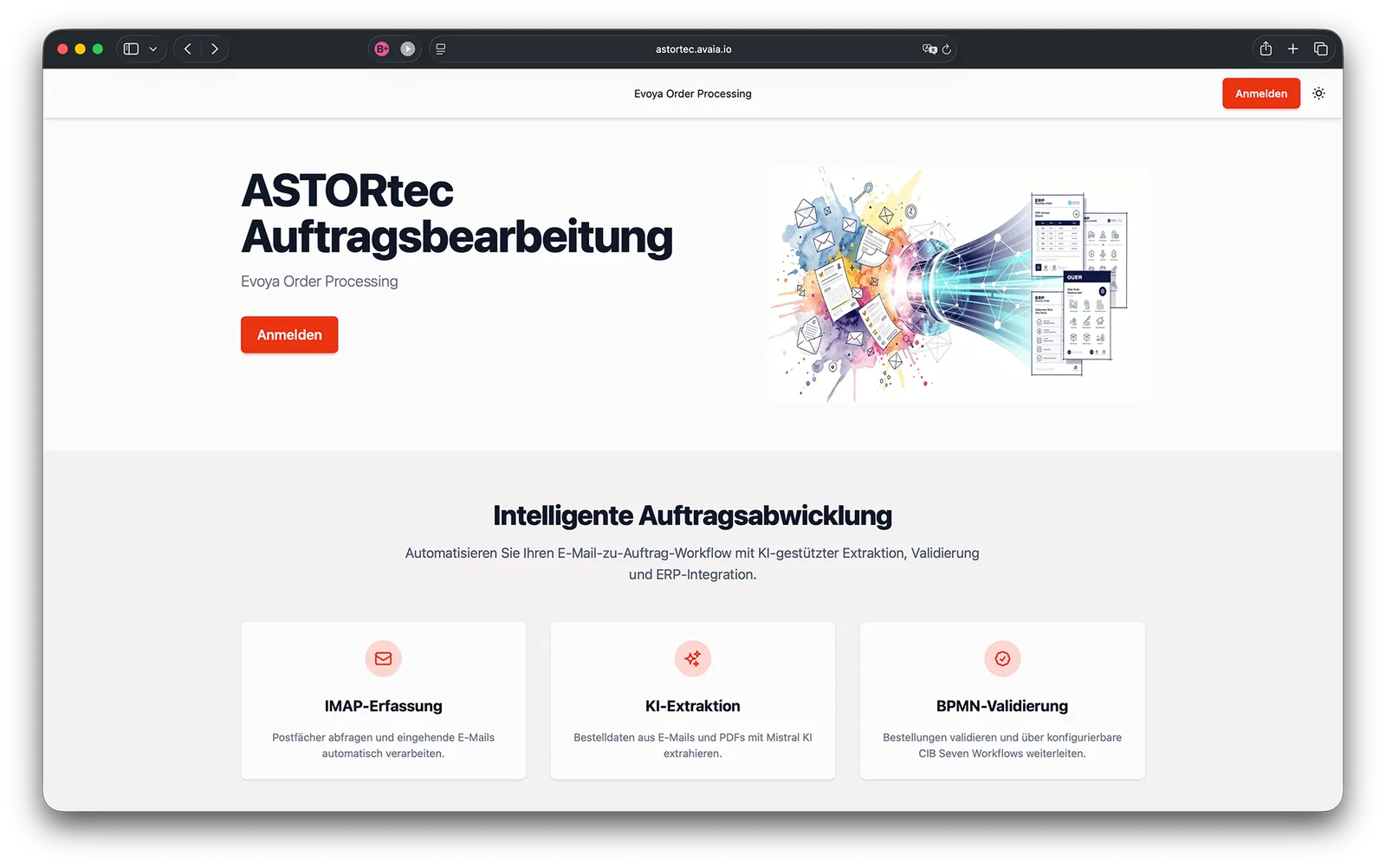
AI order capture at ASTORtec
Orders from e-mails and PDFs are captured, checked and transferred to the Europa3000 ERP automatically – 1–2 minutes per order instead of around 10.
View project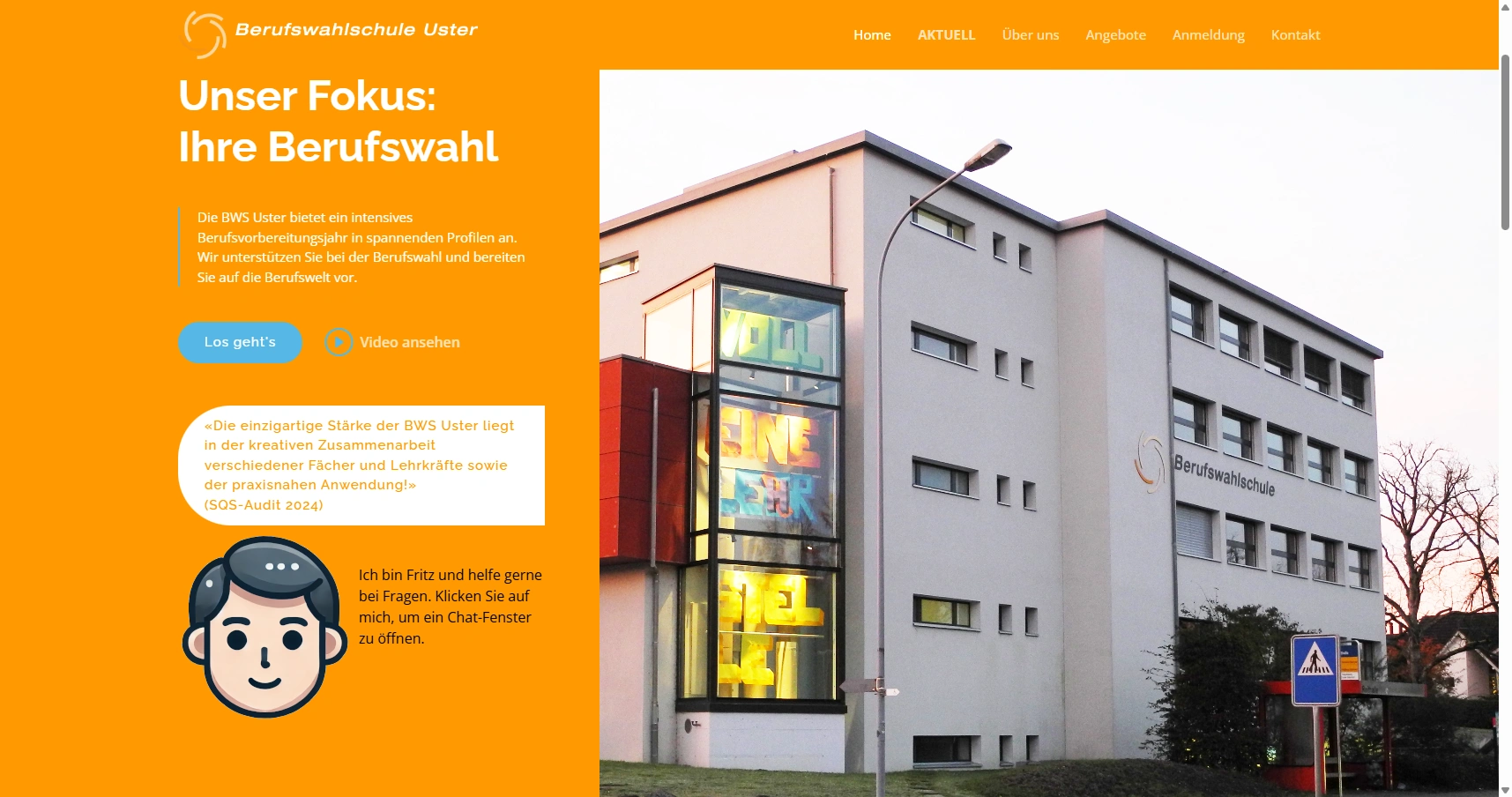
BWS Uster – AI agents and workspaces
AI workspaces, more than 30 custom AI agents and Active Directory integration for over 200 users.
View project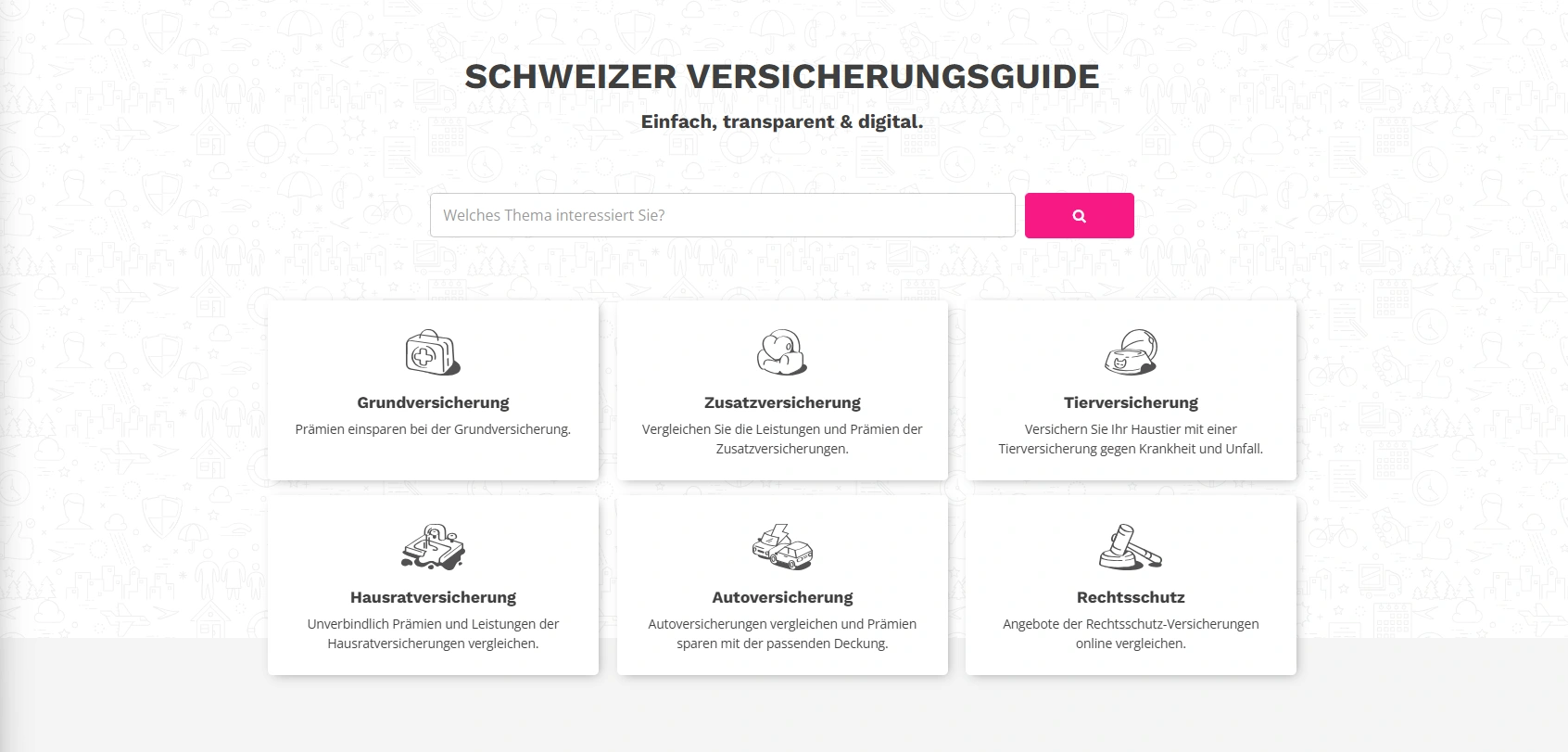
insurando.ch – AI agent for insurance advice
Insurance advice around the clock with needs assessment and lead generation, directly on the website.
View projectFrequently asked questions
An MCP server is a program that exposes a system’s data and functions to AI applications via the Model Context Protocol. It describes which tools an AI agent may use, such as «find customer» or «create order», and carries out these actions in a controlled way. Anthropic published MCP as an open standard in November 2024.
An API is a system’s technical interface, built for developers. MCP is a standard that makes such interfaces understandable for AI models: the MCP server describes the available tools, and the AI decides which one to call based on the request. MCP does not replace APIs; it usually builds on them.
According to the official MCP blog, ChatGPT, Claude, Gemini, Microsoft Copilot, Cursor and Visual Studio Code are among the applications that support the protocol. Since December 2025, MCP has been part of the Linux Foundation’s Agentic AI Foundation, co-founded by Anthropic, Block and OpenAI. Evoya Agents can also be connected to your systems via MCP.
As secure as the interface the access runs through. We use authentication based on current standards such as OAuth 2.1, grant only minimal rights, separate read from write actions and log every access. Sensitive actions can additionally require confirmation by a person.
In principle, any system that offers an API, a database or a file interface. This includes ERP and CRM systems, Microsoft 365, SharePoint, Active Directory and industry-specific applications. For legacy systems without a modern API, we build adapters.
By default in ISO 27001-certified data centres in Switzerland. Depending on your requirements, the EU, the USA or on-premise operation are also possible. Processing complies with the Swiss FADP and the GDPR, and inputs are never used to train AI models.
It depends on the number of systems, the quality of the existing APIs, the actions required and the security requirements. A read-only connection to one system is considerably simpler than an integration with write access across several systems. After a short analysis, we provide you with a concrete quote.
If AI agents are to work with your systems, usually yes. The existing API remains the foundation; the MCP server exposes selected functions from it in a form AI models can use reliably. At the same time, it limits what an agent is allowed to do at all.
Which systems should be talking to each other?
Describe your system landscape to us. We will show you which interfaces and MCP servers make sense and how AI can benefit from them.